

BYD Cars Coming to Canada in 2026: Prices, Models, Features & Everything Canadians Need to Know
sunnY123 May 29, 2026 0 COMMENTSThe electric vehicle market in Canada is about to experience a major transformation as Chinese EV giant BYD officially prepares to enter the Canadian market in 2026. Known globally for producing affordable, high-tech electric vehicles, BYD has already become one of the world’s largest EV manufacturers and recently surpassed Tesla in global EV sales. Now, Canadian consumers are eagerly waiting to see how BYD vehicles will compete against Tesla, Hyundai, Kia, Ford, and other major automakers. With affordable pricing, impressive driving range, advanced battery technology, and modern designs, BYD cars could completely reshape the Canadian EV market. In this blog, we will discuss the expected BYD models coming to Canada, estimated pricing, dealership plans, features, charging technology, and whether Canadians should consider buying a BYD in 2026. What is BYD? BYD stands for “Build Your Dreams.” The company is headquartered in China and is one of the largest electric vehicle manufacturers in the world. BYD produces electric cars, SUVs, buses, trucks, batteries, and hybrid vehicles. The company is especially famous for its Blade Battery technology, which offers improved safety, longer lifespan, and better efficiency compared to many traditional EV batteries. BYD vehicles are already popular in countries such as Australia, Europe, Mexico, Thailand, Brazil, and several Asian markets. The company is now aggressively expanding into North America, with Canada becoming a key target market for 2026. Is BYD Officially Coming to Canada? Yes, BYD has confirmed plans to launch in Canada in late 2026. Reports suggest that the company plans to open more than 20 dealerships across Canada during its first year of operation. Major cities expected to receive dealerships first include: Toronto & Greater Toronto Area (GTA) Vancouver Montreal Calgary Ottawa The Greater Toronto Area is expected to become BYD’s primary launch location in Canada. Reports also suggest that dealership scouting is already taking place in Ontario. Why Canadians Are Excited About BYD There are several reasons why Canadian consumers are excited about BYD electric vehicles: 1. Affordable Pricing One of BYD’s biggest advantages is affordability. Many BYD EVs are expected to cost significantly less than Tesla, Ford, or Hyundai electric vehicles. 2. Long Driving Range BYD vehicles offer impressive battery range, making them ideal for Canadian driving conditions and long-distance travel. 3. Advanced Battery Technology BYD’s Blade Battery technology is considered one of the safest EV battery systems in the world. 4. Modern Features Most BYD vehicles include large touchscreens, panoramic roofs, advanced driver-assistance systems, premium interiors, and smart connectivity features. 5. Growing EV Demand in Canada As gas prices continue to fluctuate and governments promote electric vehicle adoption, Canadians are increasingly searching for affordable EV options. BYD Cars Expected to Launch in Canada in 2026 BYD Seal The BYD Seal is expected to become one of the company’s most popular vehicles in Canada. This sleek electric sedan directly competes with the Tesla Model 3. Expected Canadian Price: Starting around CAD $45,000 Estimated Range: Up to 570 km Battery Capacity: 82.6 kWh Drive Type: Rear-Wheel Drive (RWD) The BYD Seal offers sporty performance, fast charging, premium interior quality, and advanced technology features. Canadians looking for a Tesla alternative at a more competitive price may find the Seal extremely attractive. BYD ATTO 3 The BYD ATTO 3 is a compact electric SUV expected to become a strong competitor against the Hyundai Kona Electric and Kia Niro EV. Expected Canadian Price: Around CAD $38,000 Estimated Range: Up to 420 km Battery Capacity: 60.5 kWh The ATTO 3 is already very popular in Australia and Europe due to its stylish design, spacious interior, and affordable pricing. BYD Dolphin The BYD Dolphin is a compact hatchback designed for urban driving and affordability. Expected Canadian Price: Around CAD $33,000 Estimated Range: Up to 427 km The Dolphin could become one of the best budget-friendly EVs available in Canada, especially for first-time EV buyers. BYD Seagull The BYD Seagull is expected to become one of the cheapest electric cars in Canada. Expected Canadian Price: Starting around CAD $22,000 to $25,000 Estimated Range: Up to 305 km The Seagull has already attracted global attention due to its low pricing and surprisingly advanced features. If BYD manages to launch the Seagull successfully in Canada, it could significantly increase EV adoption across the country. BYD Shark 6 Pickup Truck The BYD Shark 6 is a plug-in hybrid pickup truck that could compete with vehicles like the Ford Maverick and Toyota Tacoma Hybrid. Expected Canadian Price: Around CAD $55,000 Powertrain: Plug-in Hybrid (PHEV) Electric Range: Approximately 100 km EV-only range Canadian truck buyers may find the Shark 6 appealing due to its fuel efficiency and modern design. Will BYD Cars Qualify for EV Rebates in Canada? One of the biggest questions surrounding BYD’s Canadian launch is EV rebates. Some reports suggest that Chinese-built EVs may face restrictions under certain Canadian rebate programs. However, some provincial incentives may still apply depending on future government policies. Potential buyers should monitor federal and provincial EV rebate announcements closer to BYD’s official launch date. BYD Dealerships in Canada BYD plans to establish a strong dealership network across Canada. Industry reports indicate that more than 20 dealerships could open during the first year. Ontario is expected to become the company’s main launch market. This expansion is important because many consumers are concerned about vehicle servicing, warranty support, and parts availability for new EV brands. BYD Charging Technology BYD is heavily investing in fast-charging technology. The company’s latest vehicles support ultra-fast charging, allowing drivers to add significant battery range in a short amount of time. Recent BYD models also include intelligent battery management systems and improved winter-weather performance. Should Canadians Buy a BYD in 2026? BYD vehicles may become an excellent option for Canadians looking for: Affordable electric cars Long-range EVs Tesla alternatives Budget-friendly family SUVs Advanced EV technology Lower fuel costs However, consumers should also consider: Long-term reliability in Canadian winters Dealership and service availability Final pricing after tariffs and taxes EV rebate eligibility Resale value If BYD successfully builds a strong
READ MORE
Electric vehicles (EVs) are becoming increasingly popular across the world, including in Canada. As more drivers consider switching from gasoline-powered cars to electric, one common question continues to arise: Do electric cars lose charge when parked? The short answer is yes, electric cars can lose charge while parked—but the amount is usually minimal and depends on several factors. In this detailed guide, we’ll break down why this happens, how much charge you can expect to lose, and what you can do to minimize it. Understanding Battery Drain in Electric Cars Electric vehicles rely on large lithium-ion batteries to store energy. Even when the car is turned off and parked, some systems remain active in the background. This results in a small amount of energy usage, often referred to as “phantom drain” or “vampire drain.” Unlike gasoline cars, which don’t lose fuel when parked, EVs continuously use a small amount of battery power to maintain essential functions. Why Do Electric Cars Lose Charge When Parked? There are several reasons why EVs lose charge over time, even when not in use. 1. Battery Management System (BMS) Every EV is equipped with a Battery Management System. This system monitors battery health, temperature, and performance. It operates continuously to ensure safety and efficiency, which requires a small amount of energy. 2. Temperature Control In colder climates like Canada, temperature plays a significant role. EV batteries perform best within a certain temperature range. To maintain this, the vehicle may: Warm the battery in winter Cool the battery in hot conditions This process consumes energy, even when the car is parked. 3. Connected Features and Software Updates Modern EVs come with advanced connectivity features such as: Mobile app access Remote locking/unlocking GPS tracking Over-the-air (OTA) updates For example, vehicles from Tesla often stay connected to the internet, which can contribute to battery drain. 4. Security Systems Alarm systems, cameras, and monitoring features (like Tesla’s Sentry Mode) remain active even when the vehicle is parked. These systems ensure safety but also use battery power. 5. Internal Electronics Basic electronics such as: Keyless entry systems Sensors Control modules continue to function in the background and contribute to slow energy loss. How Much Charge Do Electric Cars Lose When Parked? The amount of charge loss varies depending on the vehicle model, settings, and environmental conditions. Typical Battery Drain Rates: Normal conditions: 1% to 3% per week With advanced features active (e.g., Sentry Mode): 1% to 2% per day Extreme cold weather: Higher drain due to battery heating For most EV owners, this level of loss is not significant and does not impact daily usage. Do All Electric Cars Lose Charge at the Same Rate? No, different EV brands and models have different levels of efficiency when parked. For instance: Some vehicles are optimized for low standby power usage Others, especially those with advanced tech features, may consume more energy Newer EV manufacturers like BYD are focusing on improving battery efficiency and reducing standby drain through advanced battery technologies. Does Weather Affect Battery Drain? Yes, weather plays a major role, especially in colder regions like Canada. Cold Weather Impact Batteries lose efficiency in low temperatures Energy is used to keep the battery warm Range may temporarily decrease Hot Weather Impact Cooling systems may activate Slight energy usage increases Overall, cold weather has a bigger impact on battery drain compared to heat. What Happens If You Leave an EV Parked for a Long Time? If you leave your electric car parked for weeks or months, it will gradually lose charge. However, most modern EVs are designed to handle long periods of inactivity. Example Scenario: Parked for 1 week → Minimal loss Parked for 1 month → Noticeable but manageable loss Parked for 3+ months → Battery may significantly discharge Manufacturers usually recommend keeping the battery between 20% and 80% when storing the vehicle for long periods. Tips to Reduce Battery Drain When Parked If you want to minimize energy loss, here are some practical tips: 1. Turn Off Unnecessary Features Disable features like: Sentry Mode Cabin monitoring Always-on connectivity 2. Avoid Frequent App Checking Every time you check your car’s status via an app, it “wakes up” the vehicle, using additional energy. 3. Park in a Garage Keeping your EV in a garage helps maintain a stable temperature, reducing the need for battery heating or cooling. 4. Keep Battery at Optimal Level For long-term parking, maintain charge between: 50% to 70% (ideal range) 5. Use Scheduled Charging Some EVs allow you to schedule charging times, ensuring the battery stays within a healthy range. Is Battery Drain a Major Concern? For most EV owners, battery drain while parked is not a serious issue. It becomes a concern only in specific situations, such as: Leaving the car unused for several months Using power-intensive features continuously Parking in extreme weather conditions In everyday use, the impact is minimal and manageable. Comparing EVs to Gasoline Cars While EVs lose a small amount of charge when parked, gasoline cars are not entirely free from issues either. Gasoline vehicles can experience: Fuel evaporation (over long periods) Battery drain (12V battery) Engine issues if left unused In many ways, EVs are actually more reliable for long-term parking. Future Improvements in EV Technology As electric vehicle technology evolves, manufacturers are working to reduce standby energy consumption. Companies like BYD and Tesla are investing in: More efficient battery systems Improved thermal management Smarter energy-saving software This means future EVs will likely experience even lower battery drain when parked. Final Thoughts So, do electric cars lose charge when parked? Yes—but only a small amount, and it’s completely normal. For most drivers, this minor battery drain is nothing to worry about. With proper habits and awareness, you can easily manage and minimize energy loss. Electric vehicles are designed to be efficient, reliable, and convenient—even when sitting idle. As technology continues to improve, concerns like battery drain will become even less significant.
READ MORE
The electric vehicle (EV) industry in Canada is about to witness a major shift as BYD (Build Your Dreams), one of the world’s largest electric vehicle manufacturers, prepares to enter the Canadian market. Known for its affordable pricing, innovative battery technology, and wide range of electric vehicles, BYD’s arrival could significantly impact how Canadians buy and use EVs. Why BYD Entering Canada is a Big Deal Canada’s EV market has been growing rapidly, driven by government incentives, rising fuel costs, and increased environmental awareness. However, affordability remains a major challenge for many consumers. This is where BYD stands out. Unlike traditional automakers, BYD specializes in producing cost-effective electric vehicles without compromising on quality or technology. In global markets, BYD has already surpassed major competitors in EV sales, making it a serious contender in Canada. Key Benefits for Canadian Consumers 1. More Affordable EV Options One of the biggest barriers to EV adoption in Canada is price. BYD is known for producing budget-friendly electric cars, which could make EV ownership accessible to a wider audience. 2. Advanced Battery Technology BYD’s Blade Battery technology is considered one of the safest and most efficient in the industry. It offers longer lifespan, improved safety, and better performance in cold climates—an important factor for Canadian drivers. 3. Increased Competition BYD’s entry will push other automakers to improve pricing, features, and innovation, benefiting Canadian consumers. Potential Challenges Despite the excitement, BYD may face some challenges: Regulatory approvals in Canada Building trust among Canadian buyers Establishing dealership and service networks Popular BYD Models That Could Launch Some expected models include: BYD Atto 3 (compact SUV) BYD Dolphin (affordable hatchback) BYD Seal (electric sedan) These vehicles are already popular globally and could appeal strongly to Canadian buyers. Impact on Canada’s EV Future BYD’s arrival aligns perfectly with Canada’s goal to achieve zero-emission vehicle targets by 2035. With more affordable EVs available, adoption rates are expected to rise significantly.
READ MORE
As the automotive industry continues to evolve, hybrid vehicles have become increasingly popular, offering a balance between performance, fuel efficiency, and environmental consciousness. In 2025, manufacturers have introduced a range of hybrid models catering to diverse preferences and needs. Below is a curated list of the top hybrid vehicles available this year. 🚗 2025 Honda Accord Hybrid Starting Price: $29,000 (estimated) Fuel Economy: Up to 48 MPG combined Highlights: The Accord Hybrid continues to impress with its spacious interior, smooth ride, and advanced safety features. Its refined powertrain ensures a seamless driving experience, making it a top choice for midsize sedan enthusiasts. 🚙 2025 Toyota RAV4 Hybrid Starting Price: $33,695 Fuel Economy: 37–39 MPG combined Highlights: As one of the best-selling hybrid SUVs, the RAV4 Hybrid offers a comfortable ride, ample cargo space, and a suite of standard safety technologies. Its reliability and efficiency make it a favorite among families and commuters alike. 🚗 2025 Hyundai Elantra Hybrid Starting Price: $24,920 Fuel Economy: Up to 54 MPG combined Highlights: The Elantra Hybrid stands out for its exceptional fuel efficiency, modern design, and user-friendly technology. It’s an excellent option for those seeking an affordable yet feature-rich compact sedan. 🚙 2025 Subaru Forester Hybrid Starting Price: $34,995 Fuel Economy: 35 MPG combined Highlights: The Forester Hybrid combines Subaru’s renowned all-wheel-drive capability with improved fuel efficiency. Its spacious interior and off-road prowess make it ideal for adventure seekers. 🚗 2025 BMW M5 Plug-in Hybrid Starting Price: €137,055 (approx. $150,000) Fuel Economy: Up to 148.7 MPG (combined, European cycle) Highlights: The new M5 is BMW’s first plug-in hybrid in the M series, boasting a combined output of 727 horsepower. It delivers exhilarating performance without compromising on efficiency. 🚙 2025 Toyota Grand Highlander Hybrid Starting Price: $45,660 Fuel Economy: 27–36 MPG combined Highlights: This three-row SUV offers generous space, advanced safety features, and a comfortable ride, making it perfect for larger families. 🚗 2025 Kia Niro Hybrid Starting Price: $28,385 Fuel Economy: 49–53 MPG combined Highlights: The Niro Hybrid is a versatile crossover that combines impressive fuel efficiency with a compact footprint, ideal for urban driving. 🚙 2025 Mazda CX-90 Hybrid Starting Price: $51,400 Fuel Economy: 26 miles electric-only range Highlights: Mazda’s flagship SUV offers a luxurious interior, smooth handling, and a plug-in hybrid powertrain that provides both performance and efficiency. 🚗 2025 Ferrari 296 Speciale Hybrid Starting Price: €407,000 (approx. $450,000) Fuel Economy: Not specified Highlights: Ferrari’s latest hybrid supercar combines a V6 engine with electric assistance, delivering over 800 horsepower. It’s a testament to how hybrid technology can enhance performance. 🚙 2025 Volkswagen California eHybrid Campervan Starting Price: £71,295 (approx. $90,000) Electric-Only Range: Up to 54 miles Highlights: VW’s first hybrid campervan offers modern amenities, including a kitchenette and rotating seats, making it perfect for eco-conscious travelers.
READ MORE
The Toyota RAV4 Hybrid has consistently ranked among the top hybrid SUVs in the market. Its combination of practicality, fuel efficiency, and reliability has made it a popular choice for drivers seeking a balance of performance and environmental consciousness. Let’s delve into what makes this vehicle stand out: What is the Toyota RAV4 Hybrid? The RAV4 Hybrid is a gasoline-electric hybrid version of Toyota’s popular compact SUV, the RAV4. It utilizes a sophisticated hybrid system that combines a gasoline engine with electric motors to deliver impressive fuel economy and performance. Performance and Fuel Efficiency: Powertrain: The RAV4 Hybrid employs a 2.5-liter four-cylinder engine coupled with electric motors, delivering a combined output of 219 horsepower. Fuel Economy: It boasts an estimated fuel economy of up to 41 mpg in the city and 38 mpg on the highway, making it one of the most fuel-efficient SUVs in its class. Driving Dynamics: The hybrid system provides smooth and responsive acceleration, making it enjoyable to drive in both urban and highway conditions. Interior and Features: Spacious Cabin: The RAV4 Hybrid offers a spacious and comfortable interior with ample legroom and headroom for both front and rear passengers. Cargo Space: It provides a generous amount of cargo space, which can be further expanded by folding down the rear seats. Technology: The RAV4 Hybrid comes equipped with a range of advanced features, including a touchscreen infotainment system, smartphone integration, and a suite of driver-assistance technologies. Safety and Reliability: Safety Features: Toyota is renowned for its commitment to safety, and the RAV4 Hybrid is no exception. It comes standard with a comprehensive suite of safety features, including automatic emergency braking, lane departure warning, and adaptive cruise control. Reliability: Toyota vehicles are known for their reliability and durability, and the RAV4 Hybrid is no exception. It has a strong reputation for longevity and minimal maintenance requirements. Trim Levels: The RAV4 Hybrid is available in several trim levels, each offering a different level of features and equipment: LE: The base model, offering a good balance of features and affordability. XLE: Adds more features and a higher level of comfort. SE: Offers a sportier look and feel with unique styling elements. XLE Premium: Provides a more luxurious interior with premium features and amenities. Limited: The top-of-the-line trim, offering the highest level of luxury and technology. The Toyota RAV4 Hybrid is an excellent choice for drivers seeking a practical, fuel-efficient, and reliable SUV. Its combination of performance, efficiency, safety, and comfort makes it a strong contender in the competitive hybrid SUV market. If you’re considering purchasing a hybrid SUV, the RAV4 Hybrid is definitely worth a closer look.
READ MORE
2025 Tacoma Hybrid: Toyota’s Hybrid Truck for the Adventurer in You
sunnY123 March 23, 2025 0 COMMENTSThe 2025 Tacoma Hybrid is a game-changer in the world of hybrid trucks. It combines the power and capability of a traditional truck with the fuel efficiency and eco-friendliness of a hybrid vehicle. This makes it an ideal choice for drivers who want the best of both worlds. Engine and Performance The 2025 Tacoma Hybrid is powered by a 2.5-liter four-cylinder engine that is paired with an electric motor. This powertrain produces a combined 1 output of 235 horsepower and 267 lb-ft of torque. This is enough power to tow up to 6,800 pounds and haul up to 1,620 pounds of payload. The 2025 Tacoma Hybrid also comes standard with Toyota’s Safety Sense 2.5+ suite of driver-assistance features. This suite includes automatic emergency braking, lane departure warning, and adaptive cruise control. Fuel Economy The 2025 Tacoma Hybrid is expected to achieve an estimated fuel economy of 25 mpg combined. This is a significant improvement over the 20 mpg combined fuel economy of the non-hybrid Tacoma. Price and Availability The 2025 Tacoma Hybrid is expected to start at around $35,000. It is expected to go on sale in the fall of 2023. The 2025 Tacoma Hybrid is a great option for drivers who are looking for a fuel-efficient and powerful truck. It is also a good choice for drivers who are looking for a truck that is equipped with the latest safety features. Additional Information Here are some additional things to consider if you are thinking about buying a 2025 Tacoma Hybrid: The 2025 Tacoma Hybrid is only available in a four-door configuration. The 2025 Tacoma Hybrid is only available with a short bed. The 2025 Tacoma Hybrid is only available with four-wheel drive. If you are interested in learning more about the 2025 Tacoma Hybrid, I recommend that you visit your local Toyota dealer or visit the Toyota website. Please note that the information in this blog post is based on the latest information available at the time of writing. The information may change as more information about the 2025 Tacoma Hybrid becomes available. I hope this blog post has been helpful. If you have any questions, please feel free to leave a comment below. Thank you for reading!
READ MORE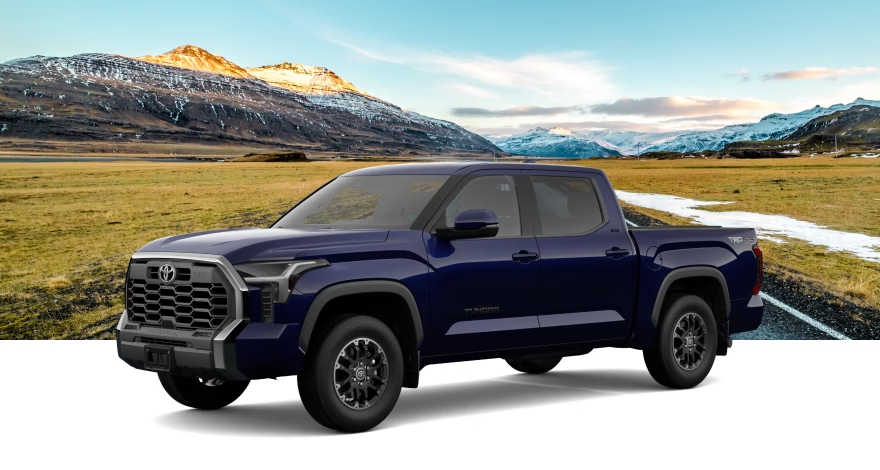
The 2025 Toyota Tundra Hybrid represents a significant leap forward for the iconic pickup truck. Building upon the already impressive capabilities of its predecessor, the hybrid model introduces a potent powertrain that delivers both robust performance and improved fuel efficiency. Powertrain and Performance At the heart of the 2025 Tundra Hybrid lies the i-FORCE MAX powertrain. This innovative system combines a 3.4-liter twin-turbocharged V6 engine with an electric motor and a nickel-metal hydride battery pack. The result is a combined output of 437 horsepower and a staggering 583 lb-ft of torque, providing instant acceleration and effortless towing power. Key Features and Highlights i-FORCE MAX Powertrain: The hybrid system delivers exceptional performance, combining power and efficiency. Advanced Technology: The 2025 Tundra Hybrid is equipped with a host of advanced features, including a large touchscreen infotainment system, a digital gauge cluster, and a suite of driver-assistance technologies. Comfortable and Spacious Interior: The Tundra offers a spacious and comfortable interior with ample legroom and headroom for both passengers and cargo. Rugged and Capable: With its robust frame and advanced suspension system, the Tundra is built to handle tough jobs and challenging terrain. Safety and Security: The 2025 Tundra comes standard with a comprehensive suite of safety features, including Toyota Safety Sense 2.5+. Fuel Efficiency While the primary focus of the Tundra Hybrid is performance, it also delivers improved fuel economy compared to its non-hybrid counterparts. The exact fuel economy figures will vary depending on driving conditions and trim level, but the hybrid system is designed to provide a significant boost in efficiency. Trim Levels and Pricing The 2025 Toyota Tundra Hybrid is available in a range of trim levels, each offering a unique combination of features and amenities. Pricing starts at around $59,950 and can vary depending on options and packages. Conclusion The 2025 Toyota Tundra Hybrid represents a significant advancement in the pickup truck segment. With its powerful hybrid powertrain, advanced technology, and rugged capabilities, the Tundra Hybrid is a compelling option for drivers who need a truck that can handle both work and play. Additional Resources Toyota Tundra Official Website: Click Here Please note: This blog post is based on information available at the time of writing and may be subject to change. For the most up-to-date information on the 2025 Toyota Tundra Hybrid, please consult your local Toyota dealer or visit the official Toyota website.
READ MORE
Porsche, the renowned German automaker, is set to further expand its electric vehicle lineup with the upcoming debut of the all-electric Cayenne in late 2025. This announcement follows the successful launch of the Taycan and Macan EV, signaling Porsche’s commitment to a sustainable future. Cayenne EV: A New Era for Porsche SUVs The all-electric Cayenne will be a true next-generation model, built on Volkswagen Group’s dedicated Premium Platform Electric (PPE) architecture. This platform is specifically designed for high-performance electric vehicles, promising exceptional driving dynamics and range. What to Expect: Sleek Design: The Cayenne EV is expected to retain the iconic Porsche design language, with sleek lines and a sporty silhouette. Powerful Performance: With dual electric motors, the Cayenne EV is likely to deliver exhilarating performance, characteristic of Porsche vehicles. Long Range: The PPE platform is designed to accommodate large battery packs, enabling the Cayenne EV to achieve an impressive range on a single charge. Advanced Technology: Expect a host of cutting-edge technologies, including advanced driver-assistance systems, a user-friendly infotainment system, and a premium interior. Boxster EV: Electrifying the Mid-Engine Sports Car Following the Cayenne EV, Porsche will introduce an all-electric version of the iconic Boxster sports car. This move marks a significant shift for the mid-engine roadster, which has traditionally been powered by combustion engines. Key Points: Platform: The Boxster EV is also likely to be based on the PPE platform, ensuring a strong foundation for performance and efficiency. Focus on Driving Dynamics: Porsche is renowned for its driving dynamics, and the Boxster EV is expected to deliver a thrilling and engaging driving experience. Design: The design of the Boxster EV is likely to be a modern interpretation of the iconic roadster, blending classic Porsche styling with futuristic elements. The Future of Porsche: Electrification and Beyond The introduction of the Cayenne EV and Boxster EV marks a pivotal moment in Porsche’s history. These models will not only expand the brand’s electric vehicle portfolio but also showcase Porsche’s commitment to innovation and performance in the electric vehicle era. Additional Considerations: Pricing: The Cayenne EV and Boxster EV are expected to be premium-priced vehicles, reflecting Porsche’s positioning in the luxury market. Competition: The Cayenne EV will face competition from other luxury electric SUVs, such as the Audi e-tron and Tesla Model X. The Boxster EV will compete with electric sports cars like the Tesla Roadster and the upcoming Lotus Evija. Timeline: While the Cayenne EV is set to debut in late 2025, the launch of the Boxster EV is expected to follow shortly after. Porsche’s foray into the electric vehicle market is gaining momentum with the upcoming Cayenne EV and Boxster EV. These models represent the future of Porsche, combining performance, luxury, and sustainability. As Porsche continues to evolve its electric vehicle lineup, the brand is poised to remain a leader in the automotive industry.
READ MORE
2025 EV Cadillac Escalade: A Luxurious Giant with a Tech-Forward Edge
sunnY123 March 20, 2025 0 COMMENTSThe 2025 Cadillac Escalade continues to reign as the pinnacle of luxury SUVs, offering a blend of opulence, power, and cutting-edge technology that’s hard to match. This year, the Escalade maintains its commanding presence with a few refinements and updates that keep it at the forefront of the segment. Exterior and Interior: The Escalade’s imposing exterior is instantly recognizable, with its bold grille, sharp lines, and signature vertical LED headlights. For 2025, Cadillac has introduced subtle styling updates, including new wheel designs and a revised color palette. Step inside the Escalade, and you’re greeted by a luxurious and tech-laden cabin. The standout feature is the massive 55-inch curved OLED display that spans the dashboard, serving as both the instrument cluster and infotainment screen. This cutting-edge display is paired with a user-friendly interface and Google built-in for seamless navigation and entertainment. Performance and Handling: The Escalade’s powertrain options remain unchanged for 2025, offering a choice between a potent 6.2-liter V8 engine or a turbocharged 3.0-liter Duramax diesel engine. Both engines deliver ample power and torque, making the Escalade capable of towing heavy loads and accelerating with authority. The Escalade’s ride quality is smooth and refined, thanks to its advanced suspension system and adaptive air ride. The handling is surprisingly agile for such a large SUV, making it a pleasure to drive on both city streets and highways. Safety and Technology: The 2025 Escalade comes standard with a comprehensive suite of advanced safety features, including automatic emergency braking, lane departure warning, and blind-spot monitoring. 1 Optional features like adaptive cruise control and Super Cruise, Cadillac’s semi-autonomous driving system, provide added convenience and peace of mind. Overall: The 2025 Cadillac Escalade remains a top contender in the luxury SUV segment. Its combination of bold styling, opulent interior, powerful performance, and cutting-edge technology makes it a compelling choice for discerning buyers. If you’re looking for a spacious, luxurious, and technologically advanced SUV, the Escalade is definitely worth considering. Additional Information: Pricing: The 2025 Cadillac Escalade starts at around $80,000 and can easily exceed $100,000 with options. Fuel Economy: The Escalade’s fuel economy varies depending on the engine and trim level, but it generally falls in the range of 14-16 mpg combined. Cargo Space: The Escalade offers ample cargo space, especially when the rear seats are folded down. The 2025 Cadillac Escalade is a luxurious and capable SUV that sets the standard for its class. With its powerful engines, advanced technology, and opulent interior, it’s a vehicle that is sure to impress. If you’re in the market for a luxury SUV, the Escalade is definitely worth a test drive.
READ MORE
The automotive industry is on the verge of a revolution, with exciting new models and technologies set to hit the market in the coming years. If you’re in the market for a new car, it may be worth holding off a bit longer to see what these innovative vehicles have to offer. Here are some of the most anticipated future cars worth waiting for: 2025 * Tesla Cybertruck: Tesla’s highly anticipated electric pickup truck is expected to finally hit the market in 2025. The Cybertruck has generated a lot of buzz with its futuristic design and impressive specs, including a range of up to 500 miles and a 0-60 mph time of under 3 seconds. Ford F-150 Lightning: Ford’s electric F-150 has already been a success, and the company is expected to release a new and improved version in 2025. The new Lightning is expected to have a longer range, more powerful motors, and additional features. Hyundai Ioniq 7: Hyundai’s flagship electric SUV is expected to be a game-changer. The Ioniq 7 will offer a spacious interior, a long range, and a host of advanced features. 2026 Cadillac Celestiq: Cadillac’s ultra-luxury electric sedan is set to be a true flagship for the brand. The Celestiq will offer a luxurious interior, a powerful electric motor, and a range of up to 400 miles. BMW i7: BMW’s flagship electric sedan is expected to be a serious competitor to the Tesla Model S. The i7 will offer a luxurious interior, a powerful electric motor, and a range of up to 400 miles. Mercedes-Benz EQS SUV: Mercedes-Benz’s flagship electric SUV is expected to be a luxurious and spacious vehicle. The EQS SUV will offer a long range, a powerful electric motor, and a host of advanced features. 2027 Rivian R1S: Rivian’s electric SUV is expected to be a true off-roader. The R1S will offer a spacious interior, a long range, and a powerful electric motor. Lucid Air Grand Touring: Lucid’s flagship electric sedan is expected to be a true luxury vehicle. The Air Grand Touring will offer a luxurious interior, a powerful electric motor, and a range of up to 520 miles. Tesla Roadster: Tesla’s long-awaited electric sports car is finally expected to hit the market in 2027. The Roadster will offer a 0-60 mph time of under 2 seconds and a range of up to 620 miles. The next few years are shaping up to be an exciting time for the automotive industry. With so many innovative and exciting new models on the horizon, it’s worth waiting to see what hits the market before making your next car purchase.
READ MORE


